
What Probate Covers in El Paso County
Probate in El Paso County is handled by the Probate Division of District Court at the El Paso County Judicial Building. The county does not have a separate local probate court. Probate records usually begin when someone files an application or petition asking the District Court for authority over an estate, trust-related issue, guardianship, conservatorship, or other protective proceeding.
If the court accepts the request, it may issue letters giving a personal representative, guardian, or conservator authority to act. Estate cases can include wills, applications, petitions, orders, claims, inventories, accountings, and closing documents. Protective proceedings often involve adult guardianship or conservatorship and are more likely to contain medical, capacity, personal, or financial details that may be restricted.
Definition: In El Paso County, probate records are District Court PR case records involving estates, wills, letters, trusts, applications, petitions, claims, closings, guardianships, conservatorships, and related protective proceedings.
Probate Terms Defined
Probate filings use role-based labels that differ from ordinary civil cases. The same person may appear in more than one role, and the public record may use a party label instead of a full narrative description.
- Decedent
- The person who has died and whose estate may be administered.
- Applicant or Petitioner
- The person asking the District Court to open or act in a probate matter.
- Personal Representative
- The person given authority to administer an estate after the court issues letters.
- Letters
- Court documents showing authority for a personal representative, guardian, or conservator.
- Heir or Devisee
- A person who may receive property through intestacy or under a will.
- Guardianship
- A protective proceeding involving authority over personal care or decision-making for another person.
- Conservatorship
- A protective proceeding involving authority over another person's property or financial affairs.
- Protected Person
- A person whose personal, medical, financial, or capacity information may be part of a protective proceeding.
How to Search El Paso County Probate Division of District Court
For docket or hearing information, use the Colorado Judicial Branch Docket Search. Select El Paso County, District Court, and case class PR if searching by case number. Docket Search can help identify the case number, hearing information, court location, and division, but it does not provide downloadable copies of probate documents.
- Identify whether the matter is an estate case, protective proceeding, guardianship, conservatorship, trust, or related probate filing.
- Search Docket Search with El Paso County, District Court, and case class PR when using a case-number search.
- For documents, submit the Colorado Judicial Record/Document Request Form and select Probate document types.
- Provide party, decedent, protected-person, or trust names; date of death if known; case number if known; and other identifying information.
- For probate counter help, use Room W150 on Wednesday walk-up hours; for general records, use Room S101 or the records request process.
- Be prepared to provide a U.S. government-issued photo ID if probate, suppressed, confidential, or protected information is involved.
Probate Division Location and Wednesday Hours
The official court location page makes El Paso County probate counter access unusually specific. Probate Division walk-up help is in Room W150 every Wednesday, with protective proceedings in the morning and estate cases in the afternoon. That distinction matters: a visitor arriving Wednesday morning for an estate question may be outside the estate window.
Probate Division of District Court
El Paso County Judicial Building, Room W150
270 S. Tejon St., Colorado Springs, CO 80903
719-452-5003
Protective proceedings: Wednesday, 8:30 a.m.-11:30 a.m.; estate cases: Wednesday, 1:00 p.m.-4:00 p.m.
El Paso County Clerk of Court Records
Room S101, 270 S. Tejon St.
Colorado Springs, CO 80903
719-452-5490
Monday-Friday, 7:30 a.m.-4:30 p.m.
Probate Document Types on the Request Form
The official Colorado Judicial Record/Document Request Form has a Probate category. Use it when requesting a copy of an estate or protective proceeding document rather than relying on the docket alone. Probate document options captured in the research are:
- Letters
- Will
- Trust
- Application
- Petition
- Closing
- Claims
- Date of Death
Requesters should provide the case number if known. If the case number is unknown, the form allows party names, date of birth when relevant, county/location, and other identifying case information. For probate, useful identifiers can include decedent name, protected-person name, applicant or petitioner name, date of death, and whether the request concerns an estate or protective proceeding.
Probate PR Search and Record Fields
Colorado Docket Search includes PR as a case class option, so probate case-number searches should use PR when the case class is known. Probate records may also show the local probate divisions tied to magistrate proceedings.
| Field | What It Shows |
|---|---|
| Case Number / PR Class | Colorado probate case identifier; PR is the probate case class in the docket search options. |
| Court Location | El Paso County Judicial Building and District Court probate filing location. |
| Division | PR1 or PR2 may appear for probate magistrate proceedings. |
| Parties and Roles | Decedent, applicant, petitioner, personal representative, guardian, conservator, protected person, claimant, heir/devisee, or trust party. |
| Documents | Letters, will, trust, application, petition, closing, claims, date of death documentation, orders, inventories, and accountings where public. |
| Restrictions | Protected-person, minor, medical, financial, or confidential details may be restricted or redacted. |
El Paso County Probate Magistrates
The official judges and staff page lists two probate magistrates for El Paso County. Kristen Hoffecker is listed as Magistrate, Probate, Division PR2, phone 719-452-5003. Thomas Treinen is listed as Magistrate, Probate, Division PR1, phone 719-452-5003. The same phone number also appears in the probate access notes, but ordinary document requests should still go through the court record request channels unless the question is specifically about probate counter or division procedure.
Local probate division details come from the Colorado Judicial Branch El Paso County and court location pages. The U.S. District Court for the District of Colorado contact page is a different court system and should not be used for local probate cases.
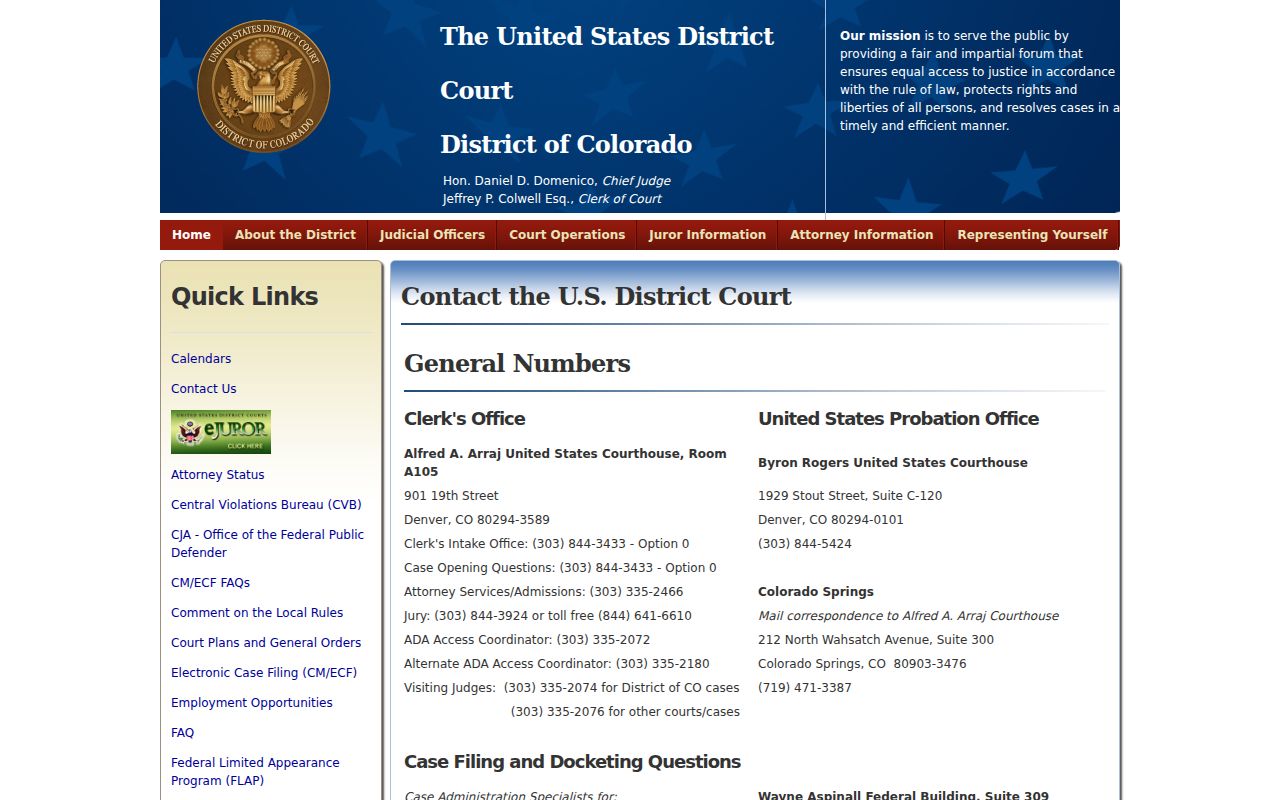
That distinction helps avoid a common routing error: federal court contact pages do not replace the El Paso County District Court probate record process.
Probate Record Fees
Probate copies use the Colorado Judicial Branch court record fee schedule. The fees below apply to court copy and research requests captured in the research, not to unrelated county recording fees or federal court fees.
| Item | Amount / Note |
|---|---|
| Court copy per page | $0.25. |
| Certified or exemplified copy | $20 per document. |
| Name search | $5. |
| Off-site case file retrieval | Actual cost of retrieval. |
| Research/redaction | $30 per hour in 15-minute increments after the first hour. |
| Fee waiver note | Fee waived if required under CJD 06-01 or C.R.S. § 13-32-104(1)(a). |
What El Paso County Probate Division Records Show
Estate records may show the will, application or petition, case-opening filings, letters, claims, orders, inventories, accountings, and closing documents where public. Protective proceedings may show guardianship or conservatorship petitions, orders, letters, and related filings. The visible record depends on the case type, party status, court order, and whether the document contains protected information.
Probate also has a practical timing issue: Docket Search may show a case or event before a requester can obtain every document. The court record request form is the document-copy path, and the court may need to review requested materials for redaction, identity requirements, or restriction before release. If the matter is older or off-site, actual retrieval costs may apply.
Restricted Probate and Protective Records
The Judicial Branch record request form specifically warns that probate records, suppressed cases, juvenile records, or documents containing confidential/protected information may require a U.S. government-issued photo ID. Protective proceedings can include medical, capacity, financial, personal, minor, and protected-person details, so they are more likely to be partly restricted or redacted than a routine estate docket entry.
Colorado public access also operates under court-specific rules such as CJD 05-01 and the Colorado Supreme Court rule on Public Access to Information and Records. General public-record principles do not mean every probate document is available to every requester. A nonparty may receive a docket or some estate documents but be denied a protected document, receive a redacted copy, or be told to obtain a court order.
The U.S. Bankruptcy Court for the District of Colorado is also separate from El Paso County probate. Bankruptcy may affect debts or estate administration in some situations, but it is not the local probate file custodian.
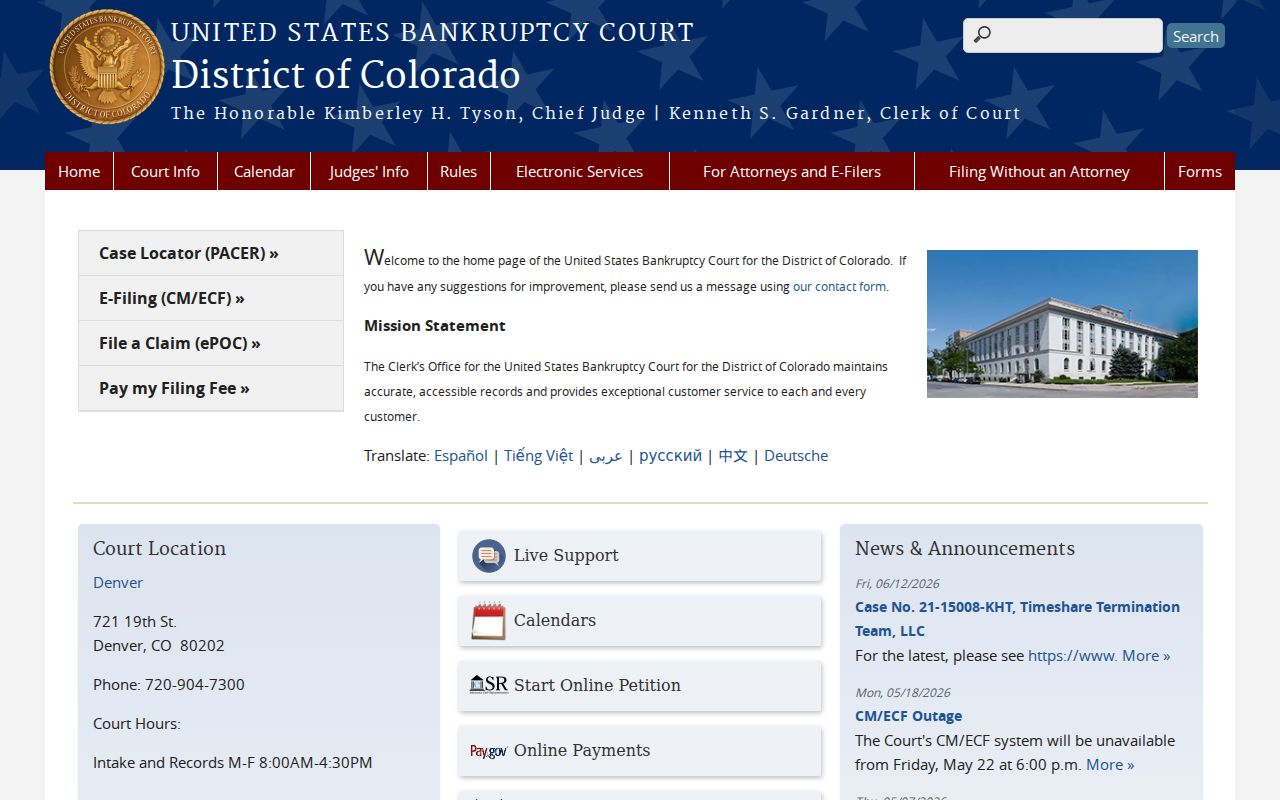
Use federal bankruptcy resources only for bankruptcy cases; wills, letters, estates, guardianships, conservatorships, and PR probate files remain with the District Court probate process.
Probate Access Channels
El Paso County probate access works best when each channel is used for the right purpose. Use Docket Search for public docket and hearing information. Use the Record/Document Request Form for letters, wills, trusts, applications, petitions, closings, claims, and date-of-death documents. Use Room W150 during Wednesday probate walk-up hours for probate-specific counter help. Use Room S101, 04ResearchRequest@judicial.state.co.us, or 719-452-5490 for general court record requests.
If the record involves a restricted protective matter, bring or upload identity information when requested and expect the clerk to apply statute, rule, order, or local restriction. If the record involves a federal bankruptcy case, a federal civil matter, or a real-property recording, use the correct federal or Clerk and Recorder record system instead of the probate division.