
El Paso County Criminal Court Records
A criminal court record is the case file kept by the court after a prosecutor files a criminal matter. In El Paso County, felony criminal cases are District Court records. Misdemeanors, traffic offenses, and felony complaints may appear in County Court. A criminal case file may include a complaint or information, ticket, register of action, charges, hearing dates, bond information, minute orders, plea entries, verdict, disposition, sentence, probation terms, restitution, and protection orders.
The District Attorney describes the District Court unit as the office's largest unit and the one that handles the most serious and violent crimes. The County Court unit handles misdemeanor and traffic offenses. Jail custody data, booking data, and bond updates may help explain why a person is in custody, but the court record is the file that shows what the court did with the case. For a closer look at charges after arrest, use the El Paso County arrest records and court charges page.
Search El Paso County Criminal Court Records
Start with the Colorado Judicial Branch Docket Search. Select a location filter tied to El Paso County, then use a case number, defendant name, attorney name, or other field. For criminal case-number searches, the case class may include CR, M, T, R, or related court classes depending on the case type. Docket Search is a public route to case activity, but the full criminal court record must be requested from the court.
- Identify whether the matter is likely District Court, County Court, or municipal court.
- Search Docket Search by case number if known, or by defendant name with a useful date range.
- Confirm the court type, case class, division, party name, and docket entries.
- Look for entries tied to charges, arraignment, plea, motions, disposition, sentence, or protection order.
- Use the Record/Document Request Form to request the complaint, information, ROA, disposition, or sentence order.
The official court path is the best route for a case file. The CBI Internet Criminal History Check is different. CBI provides Colorado criminal-history checks and can help with statewide criminal-history questions, but it is not the same as an El Paso County criminal court case file.
The official Colorado ICHC criminal-history portal is a separate state system.
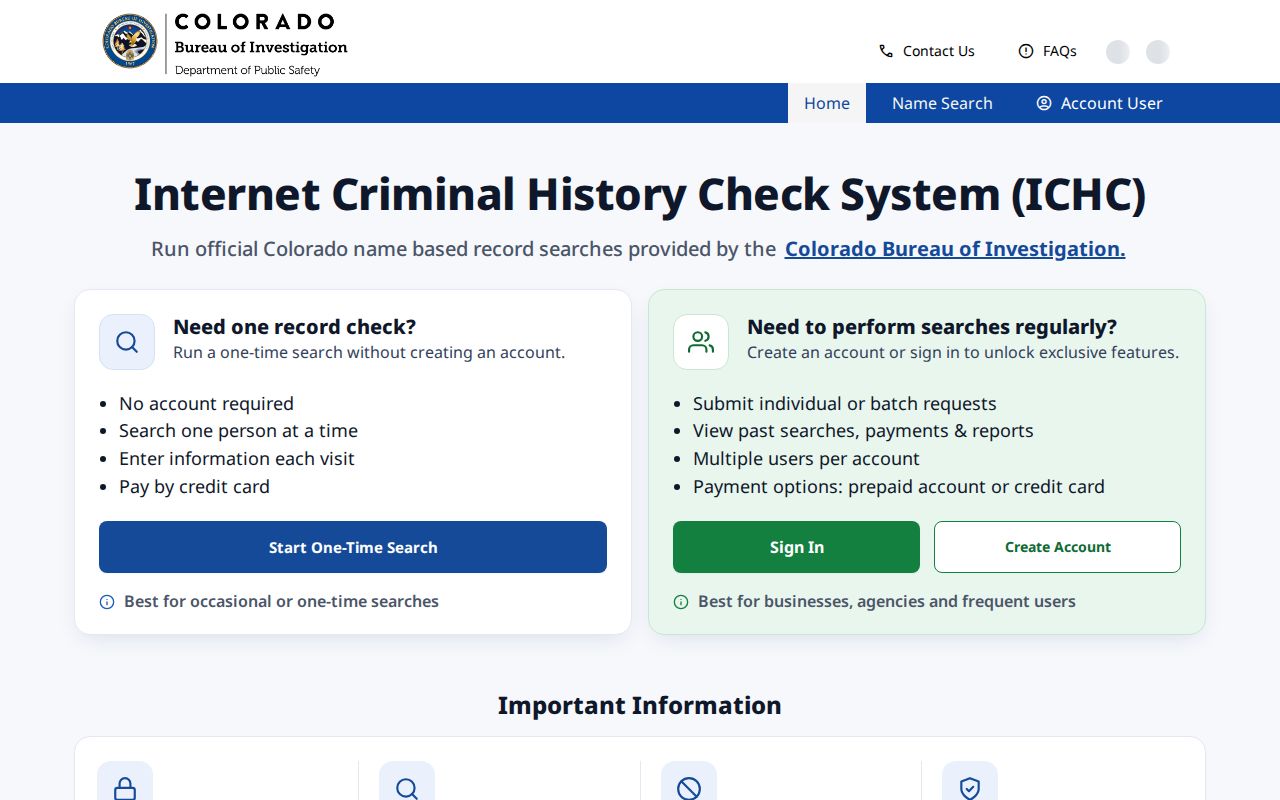
Use it for statewide background-check data, then use the Clerk of Court for case documents.
El Paso County Criminal Case Flow
A criminal court record grows as the case moves through the court. The first public court record may be a ticket, complaint, information, or related filing. An advisement or arraignment may follow. Later entries can show motions, hearings, plea negotiations, trial settings, verdicts, dismissed charges, sentencing orders, restitution, probation conditions, or appeal activity.
Case flow: Charges Filed › Arraignment › Pretrial / Motions › Plea or Trial › Disposition › Sentencing
| Stage | What Happens |
|---|---|
| Charges Filed | The prosecutor files a complaint or information, or a ticket starts a lower-level case. |
| Arraignment | The defendant is advised of the charge and enters a plea such as guilty, not guilty, or no contest. |
| Pretrial / Motions | The docket may show motions, orders, continuances, discovery activity, bond issues, or protection order entries. |
| Plea or Trial | The case may resolve through a plea, bench trial, jury trial, dismissal, or other court action. |
| Disposition | The record shows the outcome for a charge or case, such as guilty, dismissed, acquitted, or deferred. |
| Sentencing | The sentence order may state jail, prison, probation, fines, restitution, treatment, or other conditions. |
What El Paso County Criminal Records Show
The criminal court file is more detailed than a docket result. The docket can locate the case and show activity, while the requested file can show specific criminal documents such as the complaint or information, disposition or sentence order, protection order, ticket, and register of action. A register of action is a brief case history that can include charges, sentences, and minute orders.
| Field | What It Shows |
|---|---|
| Case Number | The Colorado case identifier, often built from year, case class, and sequence. |
| Defendant | The person charged in the criminal case. |
| Court Location | El Paso County Judicial Building, District Court, County Court, or a listed division. |
| Charges | Filed allegations, charge level, amended charges, dismissed charges, or related ticket information. |
| Bond / Holds | Bond amount, bond conditions, court holds, or custody-related notes when included. |
| Plea | The defendant's formal answer, such as guilty, not guilty, or no contest. |
| Motions and Orders | Pretrial requests, court rulings, continuances, protection orders, or minute orders. |
| Disposition | The outcome of each charge or case. |
| Sentence | Punishment, probation, fines, restitution, jail or prison, and other court-ordered terms. |
| Restrictions | Sealed, suppressed, juvenile, or redacted data that may not be open to public requesters. |
El Paso County Criminal Court Split
Criminal case location turns on severity and filing stage. District Court handles felony criminal cases and more serious matters. County Court handles misdemeanors, traffic offenses, and felony complaints before transfer. A city municipal court can handle municipal criminal or traffic ordinance cases, so the court named on a ticket or summons controls the next step.
| Court Level | Criminal Record Role | Search / Request Route |
|---|---|---|
| District Court | Felony criminal cases and related serious matters. | Docket Search and Clerk of Court document request. |
| County Court | Misdemeanors, traffic offenses, and felony complaints. | Docket Search, payment tools, and Clerk of Court request. |
| Municipal Court | City ordinance, municipal traffic, and municipal criminal cases. | The municipal court or payment portal named on the summons. |
| CBI | Statewide Colorado criminal-history records. | ICHC or CHRI process, not full case documents. |
El Paso County Charges vs Convictions
A charge is an allegation filed in court. A conviction is an outcome after a guilty plea, guilty verdict, or other court finding that results in guilt. A criminal court record can show charges that were amended, reduced, dismissed, or resolved in different ways. That is why reading only the first charge line can be misleading.
| Point | Charge | Conviction |
|---|---|---|
| Meaning | An accusation or filed allegation. | A final or accepted finding of guilt. |
| Record Stage | Appears early in the court file. | Appears after plea, verdict, or final disposition. |
| Can Change | May be amended, reduced, dropped, or dismissed. | May later be appealed, modified, or sealed if eligible. |
| How to Verify | Read the charging document and docket entries. | Request the disposition or sentence order. |
Read Dispositions and Sentences
Disposition is the status or result of a charge or case. Common terms include guilty, not guilty, dismissed, deferred, acquitted, or dismissed with or without prejudice. A sentence order gives the court's punishment or conditions. In El Paso County criminal court records, a sentence may include probation, jail, prison, fines, costs, restitution, treatment, community corrections, or other terms.
Financial parts of a sentence can lead to collections. El Paso County Collections handles payment plans and OJW hold questions tied to unpaid court fees or fines. The local OJW contact is 719-452-5093 or 04OJWClearance@judicial.state.co.us. Payment channels include online, in person, phone, mail, and drop box.
El Paso County Sealed vs Expunged
Colorado Judicial Branch explains sealing as hiding criminal records from public view while the records still exist. Some agencies and authorized organizations may still have access. Colorado also uses expungement language in juvenile delinquency contexts. In practice, adult sealing and juvenile expungement or sealing are different access outcomes, and neither should be treated as a routine public lookup.
| Point | Sealed | Expunged |
|---|---|---|
| Public Visibility | Hidden from ordinary public access. | Generally treated as removed from public view in juvenile contexts. |
| Record Existence | The record still exists. | Access and treatment depend on the juvenile or special statutory process. |
| Common Colorado Context | Adult criminal sealing, including some automatic conviction sealing under C.R.S. section 13-3-117. | Juvenile delinquency record sealing or expungement language. |
| Search Tool Limit | The sealed-case search confirms only certain automatic sealing for the defendant. | Not confirmed by the automatic sealed-case search described in the research. |
Public Access to Criminal Court Records
Colorado court access is shaped by CJD 05-01, P.A.I.R.R., Colorado public-record statutes, and criminal justice record rules. C.R.S. section 24-72-203 generally supports public inspection at reasonable times. Section 24-72-204 gives grounds for denial. Sections 24-72-304 and 24-72-305 address criminal justice record custodian rules and denial grounds. The Colorado Judicial Branch public access guide is the court-specific starting point.
Adult criminal case dockets are often searchable, but document access can still be limited. The court may withhold sealed, suppressed, juvenile, confidential, or protected information. The request form warns that some records may require U.S. government-issued photo ID. If a criminal case is sealed, a non-defendant may not receive information through ordinary public channels.
Note: A criminal-history check and a criminal court record answer different questions and may not match field for field.
CBI Checks and Court Files
The CBI fees and forms page lists the ICHC fee as $6 and the CHRI fee as $13. These checks can be useful for Colorado criminal-history research, but they are not certified copies of El Paso County court filings. A complete court file still comes from the Clerk of Court, and a disposition or sentence order should be requested when the court outcome matters.
CBI also maintains the state sex offender registry entry path. The registry has limitations and advises users to contact local police, the sheriff, or CBI for complete lists.
The official CBI fee and form source documents the state background-check costs.
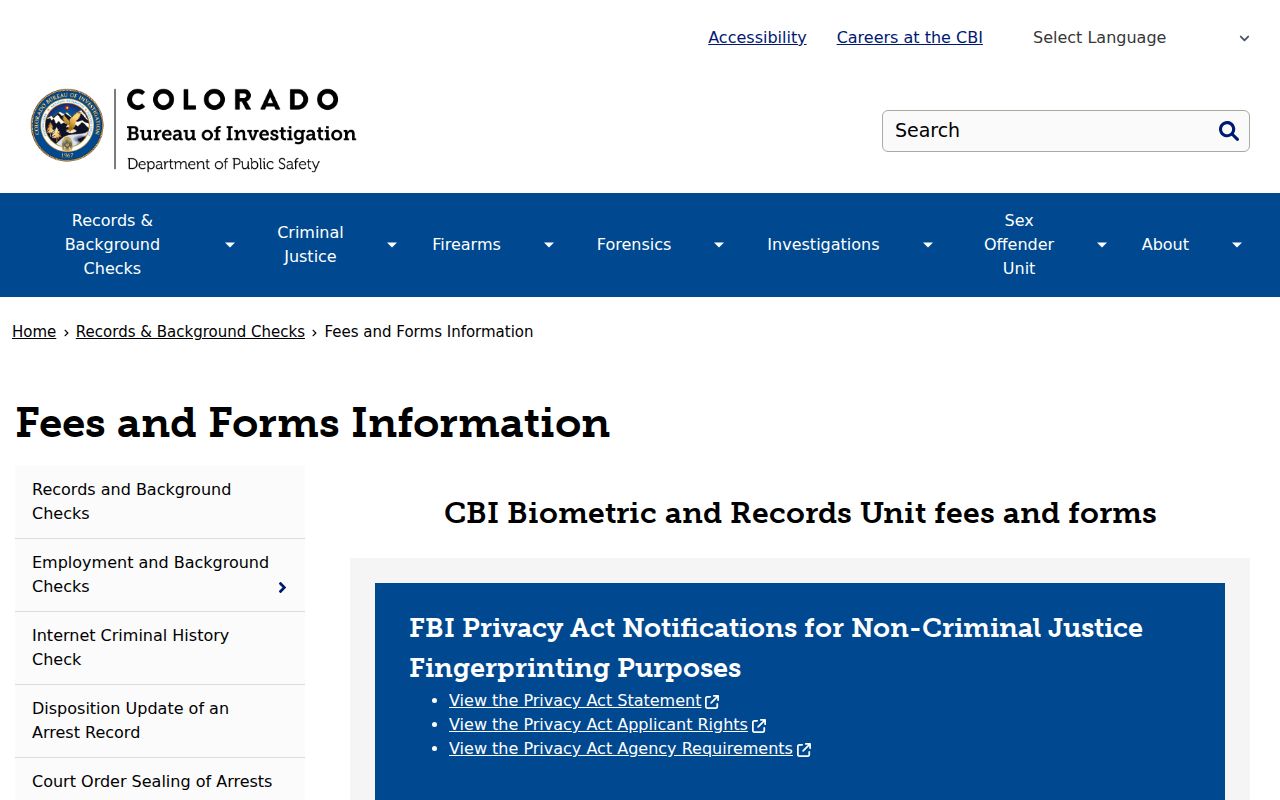
Those fees apply to state criminal-history products, not to court copy or certification charges.
The official CBI sex offender registry agreement is another statewide public-safety source.
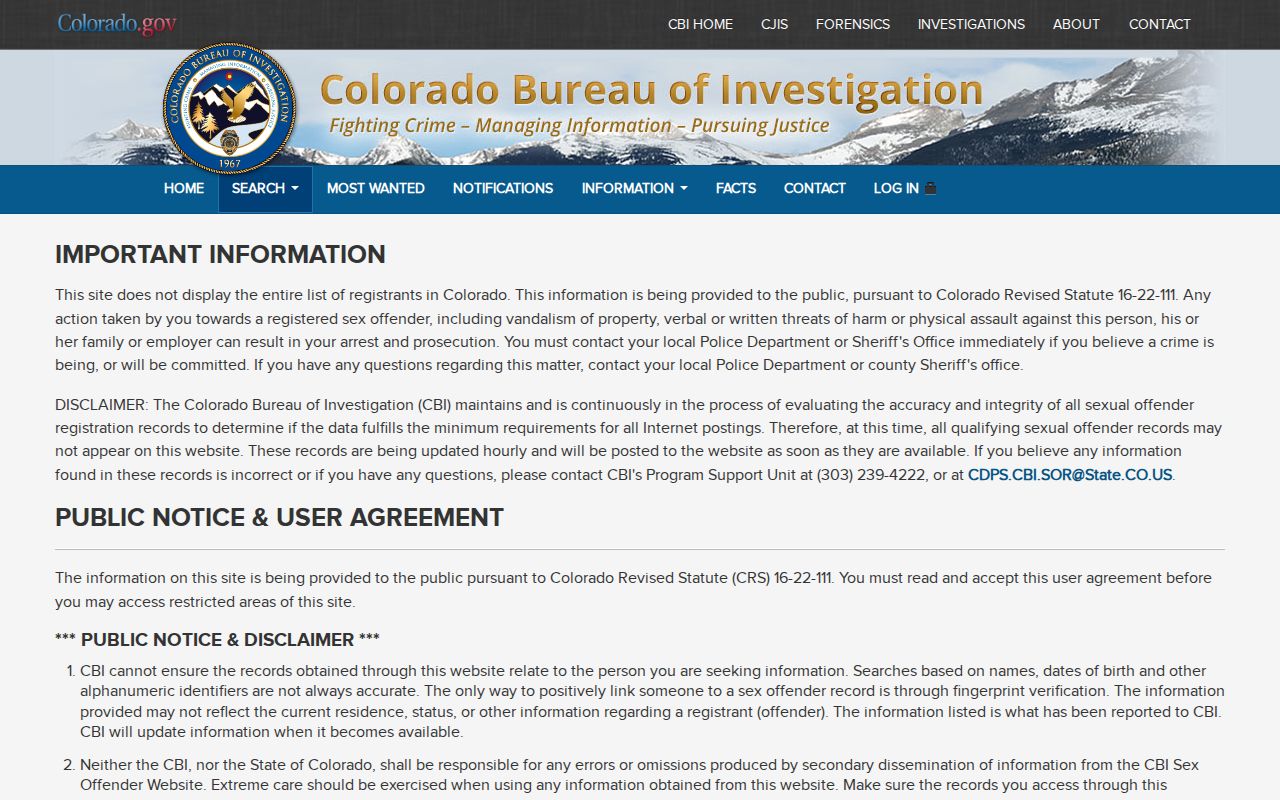
Registry data should be kept separate from the criminal court record for a specific filed case.
Restricted El Paso County Criminal Records
Restricted criminal court records include sealed cases, suppressed cases, juvenile matters, protected party information, confidential personal data, and records limited by statute, court rule, court order, or local administrative order. Personal identifying information such as Social Security numbers, financial account details, protected addresses, minor names, and medical or mental health details may be redacted.
If the case was automatically sealed under C.R.S. section 13-3-117, the defendant may use Colorado's sealed-case search to confirm that status for one case at a time. That search does not confirm all petition-based sealing, eligible non-conviction automatic sealing, or first minor-in-possession sealing. When a public criminal court record cannot be found, the next step is a court research request, not an assumption that no case exists.